
How to Bravely Ask for Anything: A Q&A with Evelyn Chen
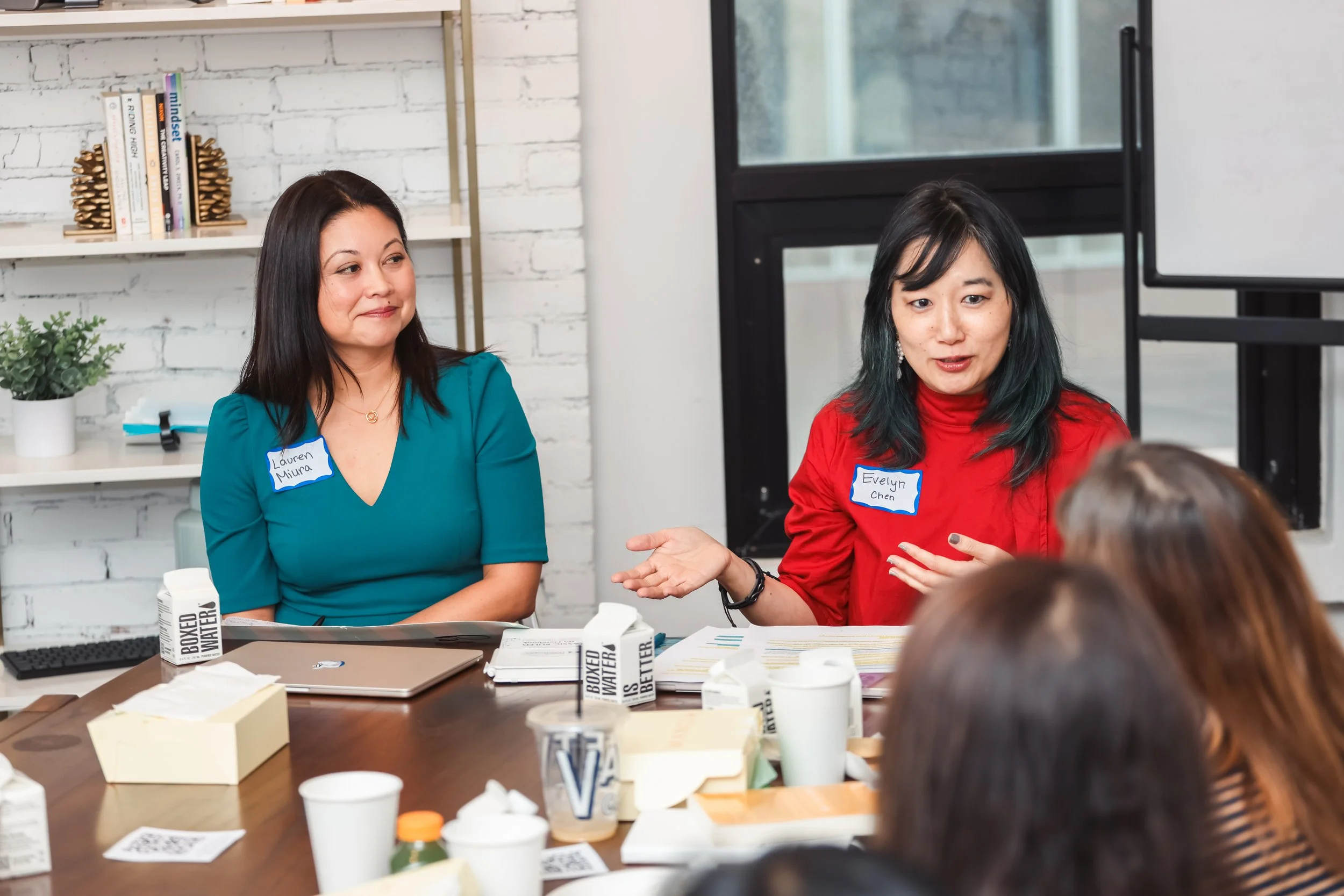
Lauren Miura (left) and Evelyn Chen (right) at a recent Women Leaders in Social Impact Breakfast in New York.
At a recent Women Leaders in Social Impact breakfast, I interviewed Evelyn Chen, a partner at Russell Philanthropies who advises nonprofits and philanthropists. Over the course of her 20-year career in the mission-driven sector, Evelyn has raised millions of dollars for leading charities. She credits this success to her belief that bravery is an active, daily practice.
When I think about bravery as a practice, instead of something that you have or don’t, it feels much more actionable. Whatever you are asking for —whether it’s donation, a promotion, a salary negotiation, or a new client engagement — Evelyn’s advice for brave asks can help set you up to hear “yes.”
Q: How do you define bravery? How has this shown up in your career?
Bravery doesn’t mean being unafraid. If you don’t feel fear, you don’t need to be brave. Being brave means that despite your fear or uncertainty, you don’t let it control your decisions or prevent you from moving forward. You trust in yourself or your team’s ability to figure it out, whatever that future might look like.
In my own career, bravery has meant saying ‘yes’ to roles I hadn’t done before and trusting I could figure it out. At other times, it has meant having the courage to say ‘no’ to an opportunity when something didn’t feel aligned.
Today, when I work with leaders, bravery often looks like naming what an organization truly needs to succeed, not just what feels safe or easy to say.
Bravery isn’t a heroic leap. It’s the practiced willingness to take the next right step even when you can’t see the whole bridge, because you trust that you’ll figure it out.
Q: Why do you think so many of us struggle to make ‘brave’ asks?
I think that we struggle because of three things:
The story we tell ourselves. Things like, ‘I hate asking, I’m not good at this, or I’ll bother them.’ One of the biggest shifts we help leaders make is rewriting that story so the ask isn’t about you at all. It’s about the mission. It’s about the impact.It’s about inviting someone to be part of something meaningful.
Lack of clarity. If you aren’t crystal clear about your case or your ‘why,’ it will naturally feel easier to shy away from brave asks. For example, when we have helped leaders sharpen their philanthropic argument— in other words, why now, why this mission, why you—they become more confident and even excited to ask donors for support.
This can also apply to job searching, for example. When you can articulate your deeper ‘why,’ and what you can bring to the position, it doesn’t feel like you’re asking to be hired. You’re offering an opportunity to be of service.Lack of preparation or alignment. This is huge. When an ask feels ‘cold’ or ungrounded, it’s scary. And honestly, it should be. Bravery isn’t about leaping blindly. It’s about being aligned and prepared. So whatever you’re asking for, I advise that you do your research, build the relationship, and learn about the decision maker’s interests.
Q: Are there tangible ways we can practice showing up with bravery?
When I coach leaders, I tell them that showing up with bravery has three parts: the groundwork, the rehearsal, and the moment.
We’ve already discussed the groundwork. Before any major ask, you’ve done the work. You’re clear on your case. You understand why this matters, why now, and why you are asking this person, specifically. So by the time you walk into the room, you may not know whether the answer will be yes, but you know you’re asking the right person for the right thing at the right time.
The second piece is rehearsal.
In our coaching at Russell Philanthropies, we role play with clients before every major meeting. We practice the opening lines. We practice saying the number or the request out loud until it feels natural. We anticipate questions or objections and map out how to respond.
And then comes the moment of the ask. The bravest and most effective fundraisers ask within the first five minutes, and then—here’s the hard part—they stop talking. That silence after the ask is often where the bravery is.
After that, the whole conversation becomes a collaborative exploration of the answer.
Q: What advice would you give to someone who wants to practice making more brave asks?
Bravery isn’t about becoming someone different. It’s about acting on the possibility that’s already there.
When you’re grounded in your purpose, supported in your preparation, and willing to take the step that feels just a little bigger than comfortable, doors open. Opportunities expand. And impact follows.
Follow Evelyn Chen on LinkedIn for more expert philanthropy tips.
Curious how coaching can support your own brave asks? Let’s set up your free 30-minute consultation.